PFA launches six new investment funds
PFA is now launching six new funds on the Du Investerer investment platform, aimed at customers who want to choose for themselves where their pension savings should be invested. With the new funds, customers will have greater flexibility and better opportunities to spread their investments – for example through investments in American equities, emerging markets, technology and utilities.
Interest among people in Denmark in managing their own investments has grown in recent years. PFA has seen this too, with customers last year almost doubling their savings in Du Investerer – PFA’s platform for those who want to choose for themselves how their pension should be invested.
In Du Investerer, customers have access to a broad range of funds within equities, bonds and mixed strategies. The six new equity funds are all index funds. In other words, they are funds that are generally characterised by low costs, as they automatically track a specific market rather than being actively managed with the aim of generating excess returns.
New opportunities in the USA, Asia and Latin America
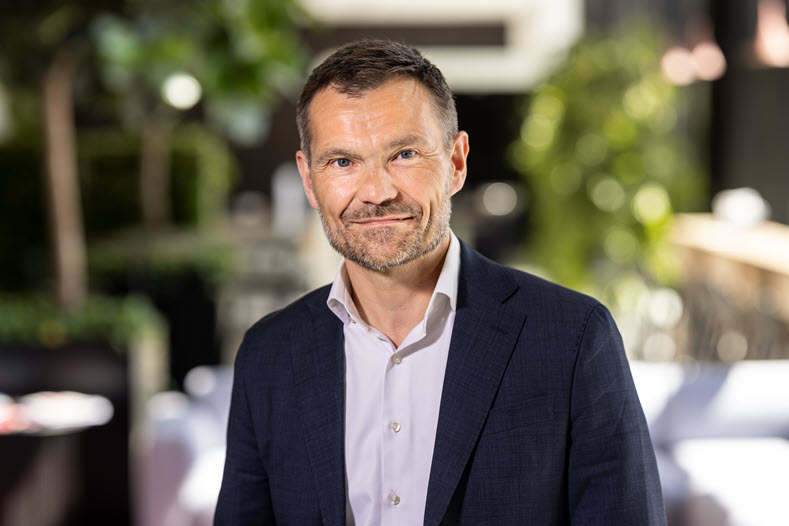
The six new funds make it possible, among other things, for customers to invest more specifically in particular regions and themes. According to PFA’s Director of Responsible Investments and Products, Rasmus Bessing, these are investment opportunities that are in demand among customers and may also be supported by long-term trends.
“The three new emerging markets funds focus on India, Asia and Latin America respectively, each of which offers some interesting dynamics. India is now the world’s most populous country, with high educational attainment and strong growth potential, while Latin America is a region rich in raw materials and appears set to become an increasingly important trading partner for the USA. Finally, the broad Asian fund provides an opportunity to gain exposure to strong growth economies with greater political stability than we have seen previously,” he says.
In addition to the three regional funds, PFA is introducing a new technology fund, a fund focused on the utilities sector and a fund that invests broadly in the American equity market, but where all equities are equal-weighted. Here too, there are some interesting dynamics:
“In the USA, it is mainly a small number of large companies that have driven equity market gains in recent years. With the broad equal-weighted fund, you can gain more exposure to parts of the American equity market that may still have room to rise. The technology fund offers the opportunity for targeted investment in a sector that increasingly forms the foundation of our society and businesses, while the utilities fund gives access to a sector that can act as a stabilising counterbalance to the more growth-focused industries,” he says.
With the six new additions, the investment universe in Du Investerer now totals 53 funds. The six new funds follow in the wake of two defence funds which PFA launched last spring and which have already grown by DKK 640 million. This means that the investment universe in Du Investerer now totals 53 funds and customer assets have grown to around DKK 34.5 billion.
What should you look for when choosing funds?
In the global investment market, there are now more funds than individual shares to choose from. PFA therefore selects new funds for Du Investerer on the basis of a thorough analysis and continually follows up on whether the funds continue to meet their objectives.
PFA does not provide advisory services on the individual funds, but encourages you to familiarise yourself thoroughly with each fund before making your choice. It may be worth considering whether you want a passively managed fund with low costs or an actively managed fund with the potential for excess returns. Active management typically costs more, so costs should form part of the assessment – along with risk, holdings and the fund’s place in the overall portfolio. It is also important to look at the fund’s results over time – but at the same time remember that historical returns do not guarantee future returns.
“Many people tend to focus heavily on returns over a short period. But when choosing funds, it is important to look at how they have performed over a full investment cycle with both good and bad periods. It is also important to look at costs, risk, what the fund invests in and whether the strategy fits your own profile, the overall portfolio and the investment risk you want,” says Rasmus Bessing.
The purpose of this news item is to provide you with information. It does not constitute advisory services and you should not make decisions solely on the basis of what is written here. If you choose to use the information, you do so at your own risk. Financial markets always involve a risk of loss. Historical returns are not a guarantee of future results and you may risk losing your invested capital.