Iran unrest drives energy prices higher and shares lower
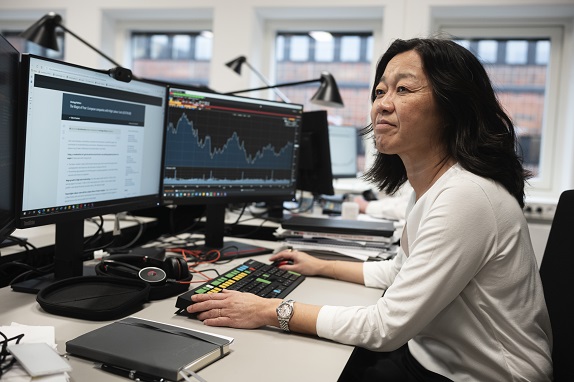
The current market turmoil is primarily due to the conflict in Iran spreading to the neighbouring countries and to the Strait of Hormuz, which is the world’s most important hub for oil transport. At PFA we have mitigated the declines of recent days by reducing equity risk earlier in the month – a course that will be maintained for as long as the uncertainty persists.
Geopolitical tensions have pushed the oil price up by more than 25 per cent since the start of the conflict, and on Monday Brent crude reached USD 119 per barrel. The uncertainty has hit equity markets across the board; the US S&P 500 index has fallen by about 2 per cent over the past week and is now in negative territory for the year, while the gains seen so far in Europe and Emerging Markets have been sharply reduced.
“Sharp increases in oil prices are generally bad news for equity markets and particularly for oil‑importing regions such as Europe and Emerging Markets, which had otherwise made a very strong start to 2026. In particular, Emerging Markets are now facing double pressure, as they are being hit by both high energy prices and a stronger dollar, which often rises along with oil. This significantly increases their costs, as both trade and debt are typically denominated in US dollars,” says Tine Choi Danielsen, chief strategist at PFA.
It all comes down to Hormuz
The current crisis is largely rooted in the unrest in Iran spreading to the Strait of Hormuz. The strait is now de facto blocked, as Iran has threatened to attack ships passing through. We have to go back to the Gulf War in 1990 to find a similar situation where sudden uncertainty about oil supplies has triggered such large price increases in such a short time.
“The situation around the Strait of Hormuz is extremely critical, as the region is home to the world’s main oil exporters. To calm the turmoil, the finance ministers of the G7 countries are meeting on Monday to discuss a coordinated release of strategic oil reserves. News of this possible intervention, together with statements from Saudi Arabia, has helped to limit the worst declines and stabilise the oil price somewhat,” explains Tine Choi Danielsen.
Low visibility calls for caution
According to Tine Choi Danielsen, the crucial factor is how long the conflict drags on. The longer prices remain high, the greater the risk that they become embedded in the underlying economy as higher inflation and weaker growth. Conversely, the threat to economic stability may increase the pressure for a swift solution – for example a “Venezuela model”, where change is sought at the top rather than a complete regime change.
At present, however, it is difficult to see signs of de‑escalation, and this is also reflected in PFA’s approach.
“Visibility is currently very low due to the uncertainty about the duration of the conflict, and we at PFA have therefore chosen to proceed cautiously. In recent times we have reduced our equity risk compared with normal levels, which has offset part of the recent declines. This is a course we will continue as long as uncertainty remains high. We recommend that, as an individual customer, you keep a cool head and leave it to PFA to manage the ongoing risk. It is important to remember that pension savings stretch over many years,” says Tine Choi Danielsen.
She notes that a typical PFA customer with a medium risk profile has achieved a return of more than 45 per cent over the past five years, which places PFA at the top of the industry.
Are you affected by the situation?
As a result of the escalation in the Middle East, PFA has set up a free psychological hotline for all 1.3 million customers who are directly or indirectly affected by the situation. Authorised psychologists are on hand around the clock to provide crisis support and counselling to private individuals, employees and management. Customers can contact the hotline by calling (+45) 40 22 81 65.